
Who experiences the most severe COVID-19 symptoms? It is not just people with a weak immune system and the elderly! Recent studies have identified genes that can make the symptoms more severe. Even the blood type may have a say.
In October 2020, just seven months after the World Health Organization declared the COVID-19 outbreak a pandemic, a group of researchers led by Andre Franke. published their findings on the genetics of severe COVID-19. They discovered two important sites that are relevant to COVID-19 in the genetic makeup of individuals. The first site, located on chromosome 3, increases the vulnerability to respiratory failure caused by COVID-19. The second site, related to the ABO blood types on chromosome 9, may have protective effects.
To conduct their study, the researchers utilized a research technique called Genome-Wide Association Study (GWAS). This approach involves comparing the entire genome of COVID-19 patients with that of healthy individuals to identify genes that contribute to the disease. By using statistical methods, they can pinpoint specific genetic regions and genes of interest.
A bit confusing? Let’s take a step back and see how this is done.
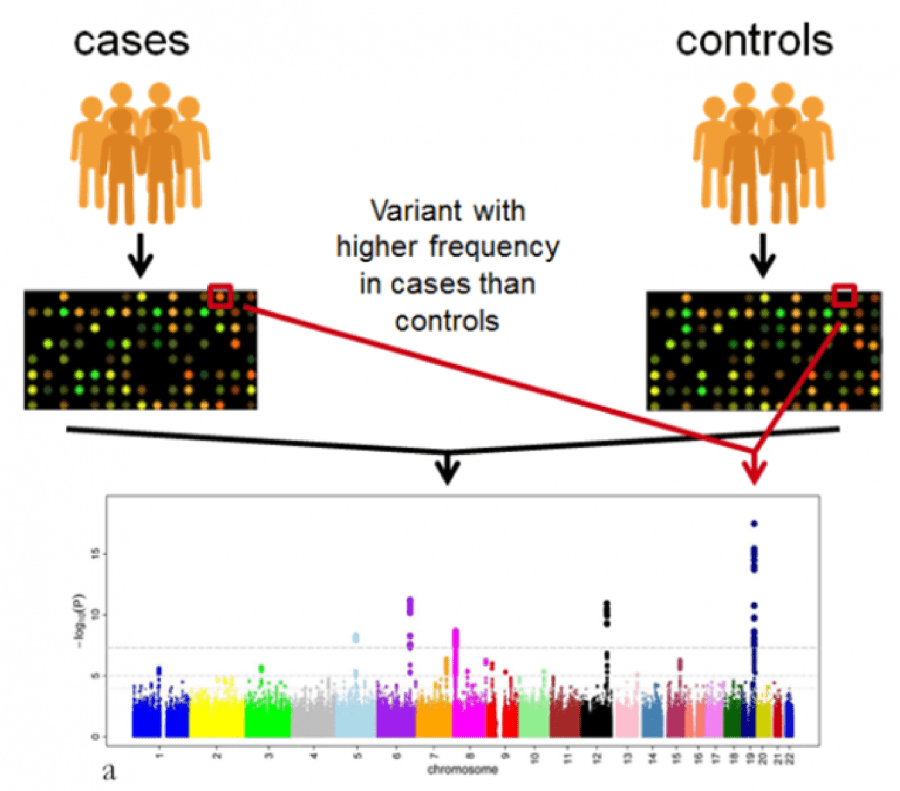
Genome-wide association study (GWAS) is a method that helps us understand how specific genetic variations relate to a particular disease. In GWAS, researchers collect samples from individuals with the disease (cases) and those without the disease (controls), and analyze their entire genome through DNA sequencing. If some genetic variation is significantly different between cases and controls, it will receive a high score on the Manhattan plot (Y-axis), suggesting a possible association with the disease.
Researchers focus on single nucleotide polymorphisms (SNPs), which are the smallest differences in DNA base pairs. For example, most COVID-19 patients (cases) might have an “A” at a certain location, while most healthy individuals (controls) might have a “G” at the same location. This difference in the SNP could indicate a potential association with the disease, such as a higher risk of contracting the virus or possible protection against severe symptoms.
In GWAS, samples are collected from individuals with the disease (cases) and from individuals without the disease (controls), and their entire genome is sequenced. After analyzing and comparing all the genetic variations on the 23 pairs of chromosomes, the researchers used a statistical test to determine if the differences are “significant” and not just random occurrences. The more significant the correlation, the higher the SNP will appear on the Y-axis of a so-called Manhattan plot (named after the similarity to Manhattan Skyline), which represents the chromosomal locations. SNPs above the dotted lines are considered significant based on statistical thresholds.
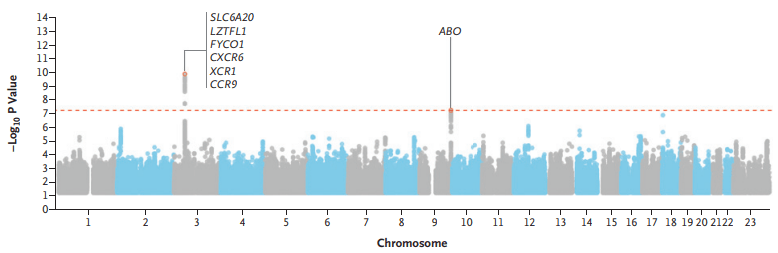
Manhattan Plot from the GWAS study, focusing on two specific loci associated with severe COVID-19 cases and respiratory failure. The red line indicates the threshold for significance.
At the 3p21.31 locus on chromosome 3, six candidate genes were identified, including SLC6A20, which encodes a protein involved in proline transportation and interacts with the SARS-CoV-2 virus, and CXCR6, which modulates the immune response in the lungs. Further studies are needed to understand the functional implications of these genes. At the 9q34.2 locus on chromosome 9, lie the genes of the ABO blood group. Individuals with blood type O are less likely to be infected and those with blood type A have a higher risk.
To put things into perspective, more than 500 million confirmed COVID-19 cases have been reported to date, with over 6 million deaths. However, according to official statistics, only 15–20% of these cases were severe, with respiratory failure, shock, or multiorgan dysfunction. The fatality rate was around 2.3%, while the rest of the patients were either asymptomatic or experienced mild symptoms.
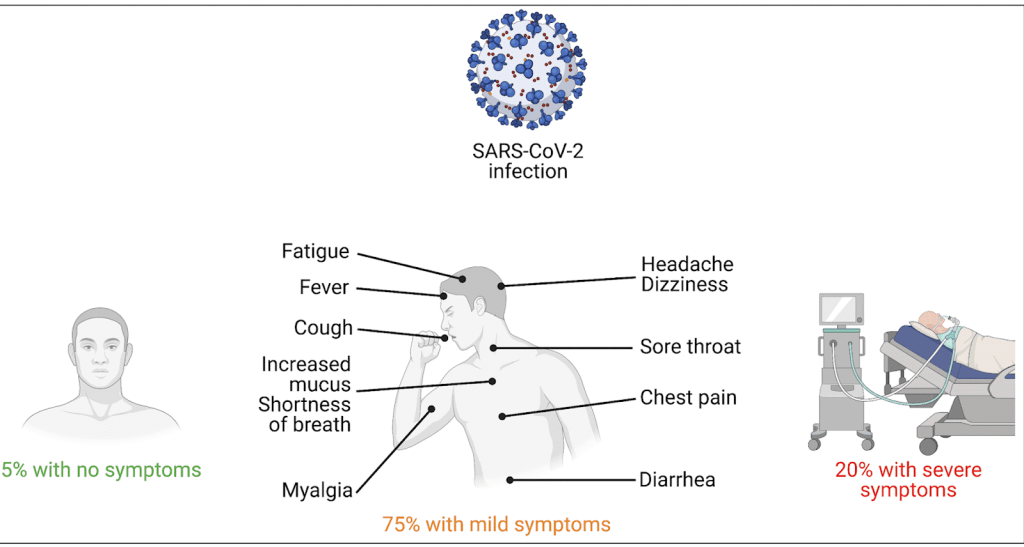
Variability of symptoms in COVID-19 patients.
Common risk factors associated with severe illness include increasing age, male gender, and underlying health conditions. However, scientists can use GWAS to explore the association between genetic variations and symptom severity in COVID-19.
We asked to comment on the study, Dr. Andre Franke, one of the lead authors, said “We were the first to report robust genetic findings for COVID-19 even though we only identified two regions in the genome.” He added that his team encountered significant challenges when conducting the research due to the urgent nature of the COVID-19 pandemic and the limited funding. The research is of great importance because it sheds light on the genetic basis of COVID-19. It also provides insight into how GWAS could be used in clinical applications for possible therapeutic targets, prognosis or preventive measures for any other disease, including cancer.
Learn more about COVID-19 research
- The genetic determinants of COVID-19.
- The pros and cons of GWAS (YouTube video).
- Blood types and susceptibility to COVID-19.
Epilogue
Eight months after the first draft of this post was written, COVID-19 has been extensively incorporated into our lives in various aspects, socially, economically, in public health aspects, and the scientific realm. Due to rapid mutations, the virus developed multiple strains more contagious and virulent than the original stain (such as the Delta and Omicron). At the brink of the 2023 New Year, we can see promising therapeutical treatment undergoing clinical trials and new vaccination and booster shots ready to be manufactured and administered for protection.
About the author
This post is written by Ruilin Yang. A passionate and curious graduate of Specialist Co-op Molecular Biology and Biotechnology. After experiences as a clinical operation assistant at Sanofi and as a medical project intern at Pfizer, she developed a strong passion for scientific research and a deep commitment to improving patient outcomes. Currently, she is actively seeking a position in the field of clinical research. Her goal is to contribute to the development of innovative therapies that will alleviate the suffering of patients and bring about positive changes in their lives.
 The Genomic Odyssey
Very nice, well done Ruilin! Your blog post was engaging and well explained 🙂
LikeLike